

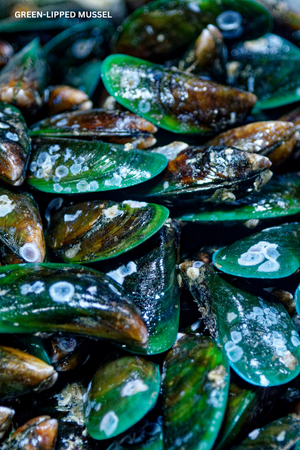
Scientific name: Perna canaliculus
Other names: Greenshell™ mussel (GSM)
By now, you may have heard of the marine animal that has established its place in the joint and mobility section of the veterinary industry with the natural benefits of this organism being utilised in nutraceutical supplements, one of which is popularly known as Yumove. Do you really know how the substances we derive from these animals function, and how do they work within the body to provide relief? Here, we will delve into this topic for your better understanding.
What is the Green Lipped Mussel?
The Green Lipped Mussel is a large species of mollusc indigenous to New Zealand, sustainably sourced for use in nutraceutical supplement production e.g. Yumove etc, with their name deriving from the physical presence of the green colour on the edge of the shell. They are bivalve molluscs meaning that they have an external covering that is a two part hinged shell containing a soft-bodied invertebrate (26). They were naturally part of the diet of the Māori people until international trade began in the 1970s where those benefits began being shared globally (23). These creatures are saltwater dwellers, thriving in the ocean and are very robust when it comes to their environmental changes. However, it is important to note that just because these animals are able to survive in increased oceanic temperatures, the higher those temperatures get (above 24C), the more vulnerable they are to bacterial infections, whereby, the mortality rates begin to increase (3). Hence, the importance of environmental care and responsibility, as the lack of which is currently understood to be causing global climate change, not only affecting those on the land but also in the ocean.
What is pain?
Pain is “a localized or generalized unpleasant bodily sensation or complex of sensations that causes mild to severe physical discomfort and emotional distress and typically results from bodily disorder (such as injury or disease)”, Merriam-Webster, (2025)
The pain pathway – overview
Three main components of the pain pathway are:
Nociceptors (Transduction) – peripheral tissue receives the noxious stimulus (pressure, tissue damage etc)
Central Nervous System (Transmission, Modulation & Projection) – information processing of noxious stimulus
Perception – the body is able to perceive the stimulus as painful
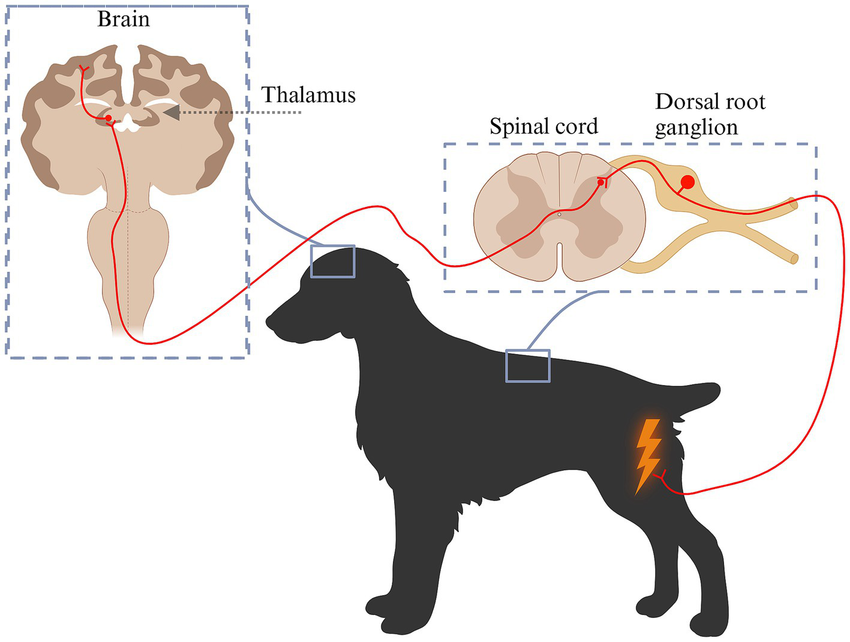
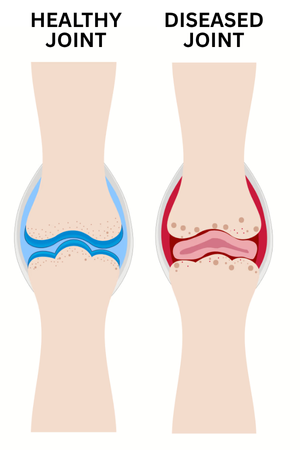
In acute pain, this pain pathway ceases once healing has completed, however, chronic pain in an animal receives its term when it shows little signs of improving or ‘maladaptive’. Looking at how the animal perceives pain, there are several components e.g. emotional (affective), behavioural (cognitive) etc. The physical disease of the joints would be termed the sensory (discriminative) component of pain perception as its function is to determine the affected area, intensity and pain duration, with the other components coming together to form what is known as the pain matrix. This is how quality of life is then seen to be affected (29).
The goal in pain management is to provide a break in the pain pathway that brings the animal relief and restores comfort, improving said quality of life further establishing the importance of chronic pain management (11). With systemic joint disease such as osteoarthritis, which is incurable – it can be managed with not just pharmaceutical products but also nutraceuticals, and this is where a supplement like Yumove is useful, as it can safely be used long term in cats and dogs without side effects, working on not just reducing pain and inflammation but providing chondroprotection as well.
How do the GLM substances work within the animal’s body?
GLM possess a multitude of substances that can be utilised when harvested, they will be explored below.
Fatty acids – EPA (eicosapentaenoic acid) & DHA (docosahexaenoic acid) & ETA (eicosatetraenoic acid)
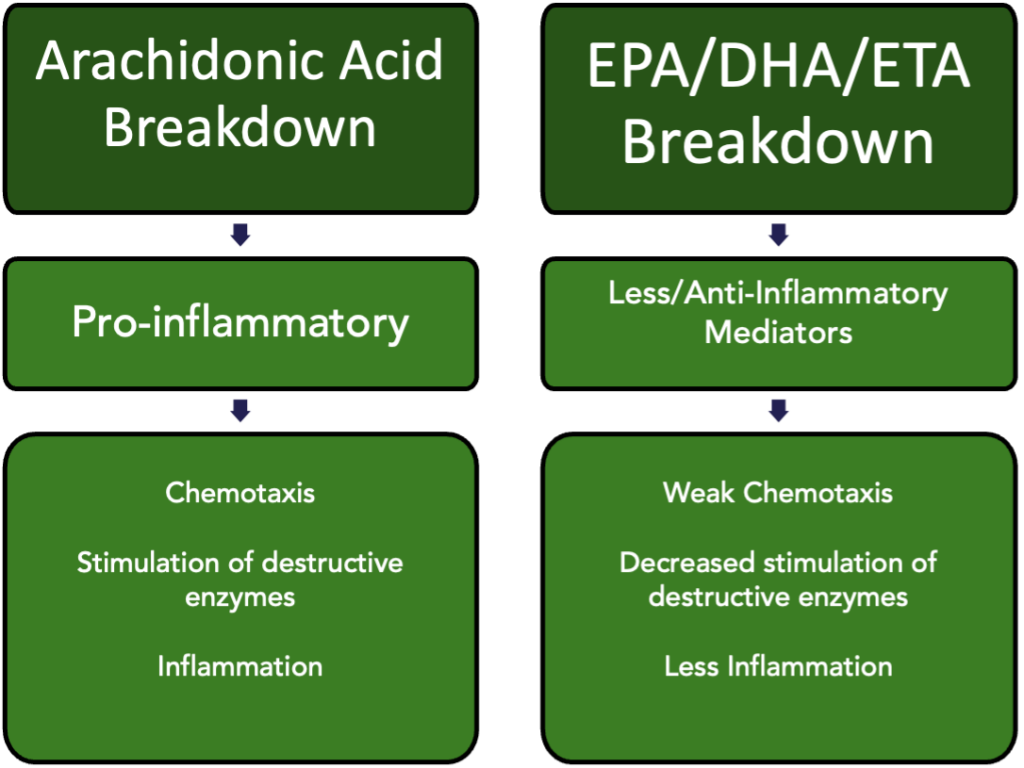
Known as n-3 polyunsaturated marine fatty acids or marine Omega-3 fatty acids (17). EPA and DHA provide; anti-inflammatory, antioxidant, antiarthritic effects and are also known to antagonise formation of certain proinflammatory prostaglandins along with reducing the production of cancer-causing cytokines such as; Tumour Necrosing Factor-a (TNF-a) and interleukin-6 (IL-6) (36). These fatty acids are a vital component of vitality, whereby the reduction of them have been seen to negatively impact the brain in a multitude of ways; from increasing the chances of brain ischemia to increasing the risk of cognition and complex function impairment (39). It is important to know about a fatty acid that is part of the COX and LOX inflammatory pathways known as Arachidonic Acid (AA), see Fig2, these pathways are involved in the enzymatic conversion of this fatty acid into eicosanoids, like prostaglandins that trigger an immune response. This may seem counter-productive when discussing anti-inflammatory factors but in a disease-free state, this immune response helps to reduce inflammation by reducing the arachidonic-derived eicosanoids (30,27). It is a polyunsaturated fatty acid within the cellular membranes, released after injury, induces hyperalgesia by reducing the pain threshold of the animal and is a very important component of inflammatory mediator stimulation. Now, in the case of joint disease, this is where the utility of ETA fatty acids from GLM come in as well, as they are abundant in this organism. ETA functions in a slightly alternative way, whereby, it inhibits the oxygenation of arachidonic acid (AA) causing a block along the cyclooxygenase (COX) and lipoxygenase (LOX) inflammatory pathways (5,23), thus significantly weakening the inflammatory cell signals. Consequently, helping in the prevention of hyperalgesia improving the animal’s quality of life.
Bioactive lipids (eicosanoids, fat-soluble vitamins (A,D,E,K))
Or alternatively termed ‘lipid messengers’ or ‘endogenous bioactive lipids’, that exist in every living organism (38), assist in the regulation of homeostasis through providing nutrients to strengthen cell signalling. In light of the significance of homeostasis, it is imperative that bioactive lipids such as; fatty acids, phospholipids etc. are maintained at their appropriate levels, allowing the body to utilise these without going into deficit (32). They do so by binding to specific leukocyte receptors known as G Protein-Coupled Receptors (GPCRs) – the largest family of membrane proteins, aiding in the body’s physiological processes, these lipids are vital components when it comes to reducing inflammation, nourishing and improving organ function. These are not to be mistaken for the more well-known examples such as; phospholipids – of which are integrated in the cell membrane structure and used as a barrier against water-soluble molecule movement, from the intracellular to extracellular environment, lipids like cholesterol – that help to maintain cell membrane flexibility; steroid hormones – that are naturally produced but can be supplemented with pharmaceutical products if the animal is in a deficit; fatty acids e.g. arachidonic acid or finally, triglycerides – those used as energy storage (14,6,32). The production of such messengers is tightly regulated as their imbalance can effectively result in cellular dysfunction, contributing to the disease process (38).
Glycosaminoglycans
These are naturally found in cartilage and joints. Also known as GAGs e.g. hyaluronic acid, are polysaccharides or linear polyanions found intracellularly and extracellularly among most mammalian cells (35). Glycosaminoglycans have the ability to interact with chemokines (a type of cytokine), which are proteins that help to keep the animal’s immune system regulated (25). A reduction in GAGs is linked to articular pathology and so the ability to supplement this in animals experiencing this is beneficial. Moreover, these polysaccharides are utilised by the body to; encourage not only cell growth and proliferation but also aids in cell signalling, strengthening the integrity of cell junctions, hence the importance of supplementation in the presence of articular pathology, as a reduction in GAGs has been noted. This is alongside a multitude of other functions such as aiding in the maintenance of cardiovascular health (16,8).
Antioxidants
Most commonly known as ‘the cleaners of free radicals’ by essentially neutralising reactive free radicals that are created by all cells experiencing oxidative stress from internal and external factors such as; metabolic processes, aging, exercise, among many others (34,21). Antioxidants are in control of keeping the levels of free radicals released in the body at a safer level, where instead of causing damage, they are beneficial to tissue repair (20); not only do they have the ability to do this but antioxidants are also able to regenerate the vessels damaged by said oxidative stress (40). For example, the medical condition, osteoarthritis, is a condition where a lot of inflammation resides in the joints, where the benefits of antioxidants can be utilised to help increase the range of motion among the joints and muscles (2). If there is a deficit of antioxidants and a surplus of reactive oxygen/nitrogen species, these will continue to cause cellular damage, leading to dysfunction within the body and contributing to disease processes (20).
Conclusion
Through the years of research, more substances residing within the GLM have found utility in the joint health and mobility area of the industry, mainly focusing on systemic inflammatory diseases namely degenerative joint diseases or chronic musculoskeletal conditions (7,37), as well as improving range of motion (ROM). Consequently, helping to prevent or slow the development of secondary conditions, such as; muscular atrophy, anorexia, joint deformities, asthenia or pain. This can ultimately have a negative impact on the animal psychologically, leading to a reduction in self-sufficiency with an unwillingness to mobilise as a result of the condition worsening (33). Studies have continued in the human medical industry, and due to the successes there, are popularising in the veterinary industry as well among dogs, cats and horses (12,10,43). GLM helps through the reduction in pro-inflammatory cytokines and reactive oxygen species. In addition to these advantages, research into the power of perna canaliculus and its potential to control osteoclastogenesis is ongoing and promising for musculoskeletal disorders as well as providing chondrocyte protection (41).

References
- Amazon (2025). Adjustable Cat Feeding Tube Collar with a Buttonhole E-Tube Bandage Cover Collar Wrap Kit for Cat Kitty : Amazon.co.uk: Pet Supplies. [online] Amazon.co.uk. Available at: https://www.amazon.co.uk/Adjustable-Feeding-Collar-Buttonhole-Bandage/dp/B09CCXBPSN
- Aristotelous, P., Stefanakis, M., Pantzaris, M., Pattichis, C.S., Calder, P.C., Patrikios, I.S., Sakkas, G.K. and Giannaki, C.D. (2021). The effects of specific omega-3 and omega-6 polyunsaturated fatty acids and antioxidant vitamins on gait and functional capacity parameters in patients with relapsing-remitting Multiple Sclerosis. Nutrients, [online] 13(10), p.3661. Available at: https://www.mdpi.com/2072-6643/13/10/3661
- Azizan, A., Venter, L., Zhang, J., Young, T., Ericson, J.A., Delorme, N.J., Ragg, N.L.C. and Alfaro, A.C. (2024). Interactive effects of elevated temperature and Photobacterium swingsii infection on the survival and immune response of marine mussels (Perna canaliculus): A summer mortality scenario. Marine Environmental Research, [online] 196, p.106392. Available at: https://www.sciencedirect.com/science/article/pii/S0141113624000539
- Bamji-Mirza, M. and Yao, Z. (2024). Phospholipases . [online] AOCS. Available at: https://www.aocs.org/resource/phospholipases/
- Bierer, T.L. and Bui, L.M. (2002). Improvement of arthritic signs in dogs fed green-lipped mussel (Perna canaliculus). The Journal of Nutrition, [online] 132(6), pp.1634S1636S. Available at: https://www.sciencedirect.com/science/article/pii/S0022316622151710?via%3Dihub
- Biga, L.M., Dawson, S., Harwell, A., Hopkins, R., Kaufmann, J., LeMaster, M., Matern, P., Morrison-Graham, K., Quick, D. and Runyeon, J. (2019). Lipid Metabolism. [online] open.oregonstate.education. Available at: https://open.oregonstate.education/aandp/chapter/24-3-lipid-metabolism/
- Brien, S., Prescott, P., Coghlan, B., Bashir, N. and Lewith, G. (2008). Systematic review of the nutritional supplement Perna Canaliculus (green-lipped mussel) in the treatment of osteoarthritis. QJM, [online] 101(3), pp.167–179. Available at: https://academic.oup.com/qjmed/article-abstract/101/3/167/1520706.
- Casale, J. and Crane, J.S. (2019). Biochemistry, Glycosaminoglycans. [online] Europe PMC. Available at: https://europepmc.org/article/NBK/nbk544295
- Casey Veterinary Services (2024). Your pets golden years. Geriatric dog. Available at: http://www.caseyveterinaryservices.com/home.html
- Corti, L. (2014). Massage Therapy for Dogs and Cats. Topics in Companion Animal Medicine, [online] 29(2), pp.54–57. Available at: https://www.sciencedirect.com/science/article/pii/S1938973614000038
- Dowdy, S.M. (2020). From periphery to perception: the pathway to pain. Vetted, [online] 115(8). Available at: https://www.dvm360.com/view/from-periphery-to-perception-the-pathway-to-pain
- Eason, C.T., Adams, S.L., Puddick, J., Romanazzi, D., Miller, M.R., King, N., Johns, S., Forbes-Blom, E., Hessian, P.A., Stamp, L.K. and Packer, M.A. (2018). GreenshellTM Mussels: A review of veterinary trials and future research directions. Veterinary Sciences, [online] 5(2), p.36. Available at: https://www.mdpi.com/2306-7381/5/2/36
- Editorial, P. (2016). Green Lipped Mussels for Dogs: How They Can Help. [online] PetMD. Available at: https://www.petmd.com/dog/wellness/green-lipped-mussels-dogs-how-they-can-help
- Gao, W., Yin, Q., Wang, X., Teng, X., Jin, R., Liu, N. and Ren, H. (2022). UHPLC-Q-Exactive Orbitrap mass spectrometry reveals the lipidomics of bovine milk and yogurt. Food Chemistry, [online] 392(1), p.133267. Available at: https://www.sciencedirect.com/science/article/abs/pii/S0308814622012298
- Giera, M. and Galano, J.M. (2019). Reference Module in Chemistry, Molecular Sciences and Chemical Engineering. 3rd ed. [online] Elsevier, pp.259–263. Available at: https://www.sciencedirect.com/science/article/abs/pii/B9780124095472139848
- Glanemann, B., Seo, Y.-J., Priestnall, S.L., Garden, O.A., Kilburn, L., Rossoni-Serao, M., Segarra, S., Mochel, J.P. and Allenspach, K. (2021). Clinical efficacy of prebiotics and glycosaminoglycans versus placebo In dogs with food responsive enteropathy receiving a hydrolyzed diet: A pilot study. PLOS ONE, [online] 16(10). Available at: https://journals.plos.org/plosone/article?id=10.1371/journal.pone.0250681
- Innes, J.K. and Calder, P.C. (2020). Marine Omega-3 (N-3) Fatty Acids for Cardiovascular Health: An Update for 2020. International Journal of Molecular Sciences, [online] 21(4), p.1362. Available at: https://pmc.ncbi.nlm.nih.gov/articles/PMC7072971/
- Kim, S. (2023). Hilarious Moment Senior Cat, Aged 18, Refuses to Be Friends With New Kitten . Newsweek. Available at: https://www.newsweek.com/old-cat-new-kitten-introduction-viral-video-tiktok-1792388
- Malireddi, R.K.S., Karki, R., Sundaram, B., Kancharana, B., Lee, S., Samir, P. and Kanneganti, T.-D. (2022). Inflammatory Cell Death, PANoptosis, Mediated by Cytokines in Diverse Cancer Lineages Inhibits Tumor Growth. ImmunoHorizons, 5(7), pp.568–580
- Mandelker, L. (2011). Oxidative Stress, Free Radicals, and Cellular Damage. Oxidative Stress in Applied Basic Research and Clinical Practice, pp.1–17
- McMichael, M.A. (2007). Oxidative stress, antioxidants, and assessment of oxidative stress in dogs and cats. Journal of the American Veterinary Medical Association, 231(5), pp.714–720
- Merriam-Webster (2025). Definition of pain. [online] Merriam-webster.com. Available at: https://www.merriam-webster.com/dictionary/pain
- Miller, M.R., Abshirini, M., Wolber, F.M., Kruger, M.C. and Rerekohu Tuterangiwhiu, T. (2023). Greenshell Mussel Products: A Comprehensive Review of Sustainability, Traditional Use, and Efficacy. Sustainability, [online] 15(5), p.3912. Available at: https://www.mdpi.com/2071-1050/15/5/3912
- MRI Plus (2024). Diagnosing Bone & Joints Disorders: Types, Symptoms And Treatment. MRI Plus. Available at: https://www.blog.mriplus.co.uk/diagnosing-bone-joints-disorders
- NIH (2024). https://www.cancer.gov/publications/dictionaries/cancer-terms/def/chemokine. [online] www.cancer.gov. Available at: https://www.cancer.gov/publications/dictionaries/cancer-terms/def/chemokine
- NOAA (2024). What is a bivalve mollusk? [online] Noaa.gov. Available at: https://oceanservice.noaa.gov/facts/bivalve.html
- Nørregaard, R., Kwon, T.-H. and Frøkiær, J. (2015). Physiology and pathophysiology of cyclooxygenase-2 and prostaglandin E2 in the kidney. Kidney Research and Clinical Practice, [online] 34(4), pp.194–200. Available at: https://pmc.ncbi.nlm.nih.gov/articles/PMC4688592/
- Pachtinger, G. (2013). How to place an esophagostomy tube. [online] VETgirl. Available at: https://vetgirlontherun.com/veterinary-continuing-education-how-to-place-esophagostomy-tubes-cats-dog-vetgirl-blog/
- Pedersen, T.R., Berendt, M. and Rusbridge, C. (2025). Neuroanatomy of spinal nociception and pain in dogs and cats: a practical review for the veterinary clinician. Frontiers in Veterinary Science, [online] 12(1). Available at: https://www.frontiersin.org/journals/veterinary-science/articles/10.3389/fvets.2025.1534685/full
- Rao, C.V., Janakiram, N.B. and Mohammed, A. (2012). Lipoxygenase and Cyclooxygenase Pathways and Colorectal Cancer Prevention. Current Colorectal Cancer Reports, [online] 8(4), pp.316–324. Available at: https://pmc.ncbi.nlm.nih.gov/articles/PMC3535427/#:~:text=COX%20and%20LOX%20are%20the,levels%20of%20AA%2Dderived%20eicosanoids
- Royal Canin (2020). Product book. Clayton, Vic.: Royal Canin
- Salsinha, A., Machado, M., Rodríguez-Alcalá, L.M., Gomes, A. and Pintado, M. (2023). Bioactive lipids: Chemistry, biochemistry, and biological properties. [online] Universidad Catolica Portuguesa. Academic Press. Available at: https://repositorio.ucp.pt/handle/10400.14/39127
- Schnaufer, T., Leite, M., Coracini, C., Nassar, P., Carvalho, A. and Bertolini, G. (2022). Effects of aerobic and resistance exercise in murine models of rheumatoid arthritis and osteoarthritis – a systematic review. Journal of Pre-Clinical and Clinical Research, 16(1), pp.16–20
- Shafi, S., Ansari, H.R., Bahitham, W. and Aouabdi, S. (2019). The impact of natural antioxidants on the regenerative potential of vascular cells. Frontiers in Cardiovascular Medicine, [online] 6. Available at: https://www.ncbi.nlm.nih.gov/pmc/articles/PMC6439348/
- Shi, D., Sheng, A. and Chi, L. (2021). Glycosaminoglycan-protein interactions and their roles in human disease. Frontiers in Molecular Biosciences, [online] 8. Available at: https://www.ncbi.nlm.nih.gov/pmc/articles/PMC7985165/
- Siriwardhana, N., Kalupahana, N.S. and Moustaid-Moussa, N. (2012). Health Benefits of n-3 Polyunsaturated Fatty Acids. Marine Medicinal Foods – Implications and Applications – Animals and Microbes, [online] 65(1), pp.211–222. Available at: https://www.sciencedirect.com/science/article/pii/B9780124160033000135
- Tay, A., Jiang, Y., Signal, N., O’Brien, D., Chen, J., Murphy, R. and Lu, J. (2022). Combining mussel with fucoidan as a supplement for joint pain and prediabetes: Study protocol for a randomized, double-blinded, placebo-controlled trial. Frontiers in Nutrition, [online] 9. Available at: https://www.frontiersin.org/journals/nutrition/articles/10.3389/fnut.2022.1000510/full
- Tu-Sekine, B. and Raben, D.M. (2022). Lipid Signaling. In: Lipid signaling. [online] Academic Press, pp.261–272. doi:https://doi.org/10.1016/B978-0-12-821618-7.00063-8
- von Schacky, C. (2021). Importance of EPA and DHA Blood Levels in Brain Structure and Function. Nutrients, [online] 13(4), p.1074. Available at: https://www.mdpi.com/2072-6643/13/4/1074
- Xu, P., Huang, Z., Xu, Y., Liu, H., Liu, Y. and Wang, L. (2024). Editorial: Antioxidants and inflammatory immune-related diseases. Frontiers in Immunology, [online] 15. Available at: https://www.frontiersin.org/journals/immunology/articles/10.3389/fimmu.2024.1476887/full
- Yang, S., Min, H.K., Park, J.-S., Na, H.S., Cho, M.-L. and Park, S.-H. (2023). A green-lipped mussel prevents rheumatoid arthritis via regulation of inflammatory response and osteoclastogenesis. PLOS ONE, [online] 18(1). Available at: https://www.ncbi.nlm.nih.gov/pmc/articles/PMC9858385/
- Yumove360 (2025). Why YuMOVE is the UK’s #1 Veterinary Joint Supplement Brand. Yumove
- Zhou, J., Fan, X., Gan, Y., Luo, Z., Qi, H. and Cao, Y. (2024). Effect of fatigue on quality of life in patients with rheumatoid arthritis: the chain mediating role of resilience and self-efficacy. Advances in Rheumatology, [online] 64(1). Available at: https://www.scielo.br/j/adr/a/hnnvdBSSkNz8kDpDYxGmF4C/